What to know first
- Small repeated practices matter more than one annual event.
- Teach the story behind the activity.
- Let young people create, not only receive.
- Make room for different family structures and levels of Korean fluency.
Start with daily life
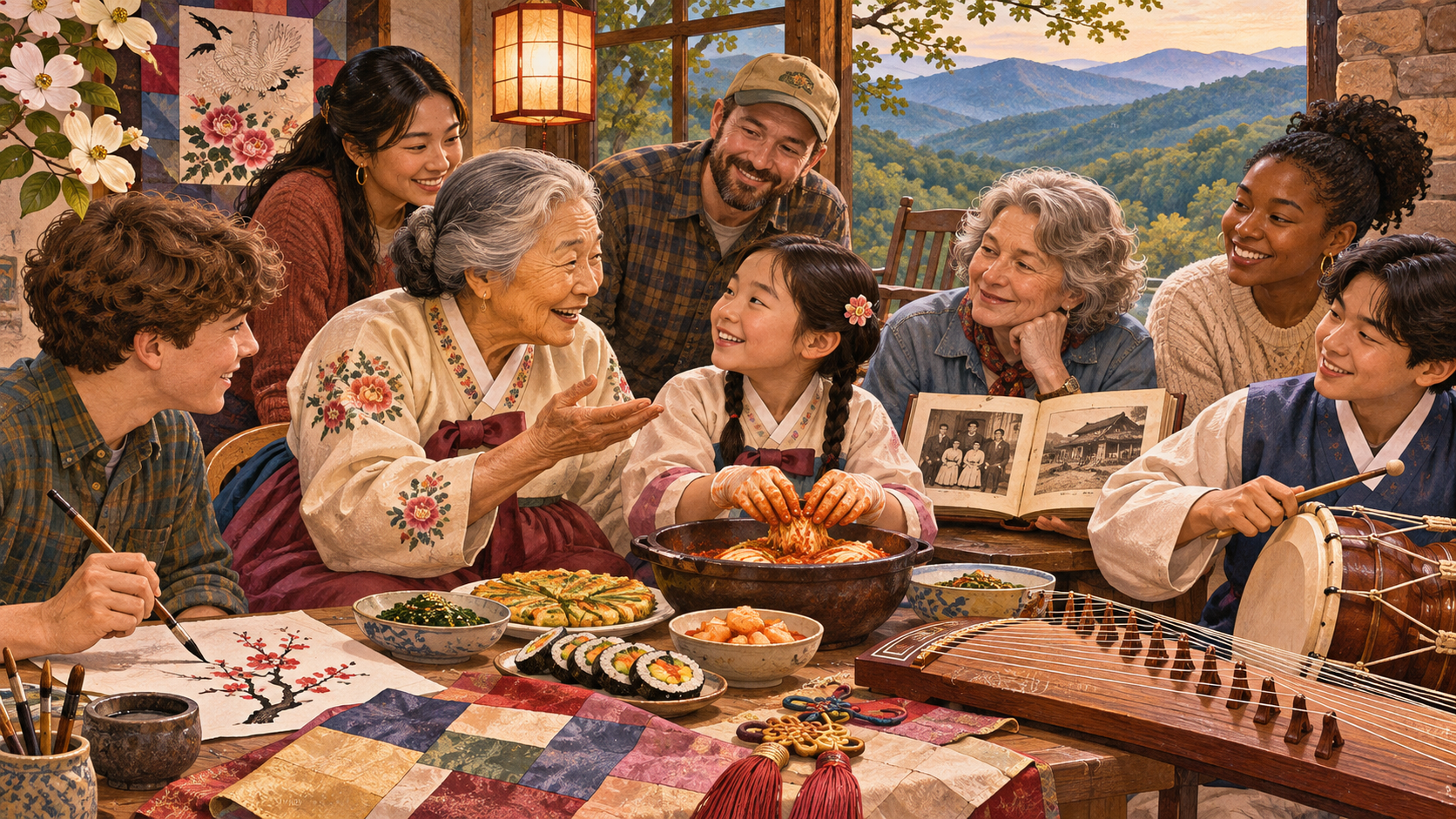
A weekly Korean meal, a phrase used at home, a call with grandparents, a playlist, or a family story can carry more emotional weight than a formal lecture. Name where the tradition came from and how your family has adapted it.
Help children become participants
- Let them interview an elder and record the story.
- Ask them to choose and help cook one dish.
- Create bilingual labels, captions, or family recipes.
- Invite them to teach a friend a game, song, or respectful phrase.
- Give youth real roles at community events: host, photographer, designer, translator, or activity leader.
Sharing at school or work
Avoid asking one person to represent all Koreans. A good presentation identifies the speaker's perspective, uses reputable sources, explains variation, and leaves time for questions. Food can support the lesson, but it should not be the entire lesson.
For schools, coordinate allergies, religious considerations, age-appropriate history, media permissions, and pronunciation in advance.
Language without shame
Some Korean American adults and children speak fluently; others understand more than they speak or are beginning from zero. Correct gently and praise effort. Language becomes a bridge when people are not embarrassed for what they did not have the chance to learn.
Build an intergenerational archive
Record migration stories, church histories, business openings, recipes, photos, and community milestones with permission. Store names, dates, locations, and context. KAKAA's history can become a resource for future students, journalists, families, and researchers only if today's stories are documented carefully.
Local and official resources
Use these links as starting points and confirm schedules, eligibility, prices, and services directly.
Common questions
What if my child resists Korean language or cultural activities?
Reduce pressure, connect the activity to relationships and interests, offer choices, and avoid framing identity as a test they can fail.
How can adoptees or multicultural families participate?
Programs should welcome different relationships to Korean identity and avoid assumptions about family history, appearance, language, or citizenship.
JOIN THE CONVERSATION
What ordinary family practice has carried the most Korean culture across generations for you?
Your experience may help another community member find useful people, places, and support.
Loading comments…