What to know first
- Explain meaning before asking people to perform a tradition.
- Avoid presenting one family's practice as the only authentic version.
- Design activities for children, adults, and elders.
- Credit teachers, cooks, artists, and cultural sources.
Seollal: renewal, family, and respect
Lunar New Year programs can introduce sebae, tteokguk, yutnori, family greetings, clothing, and hopes for the year. A community event should explain which practices are customary, which are family-specific, and how guests can participate respectfully without turning the gathering into a costume display.
Chuseok: gratitude and connection
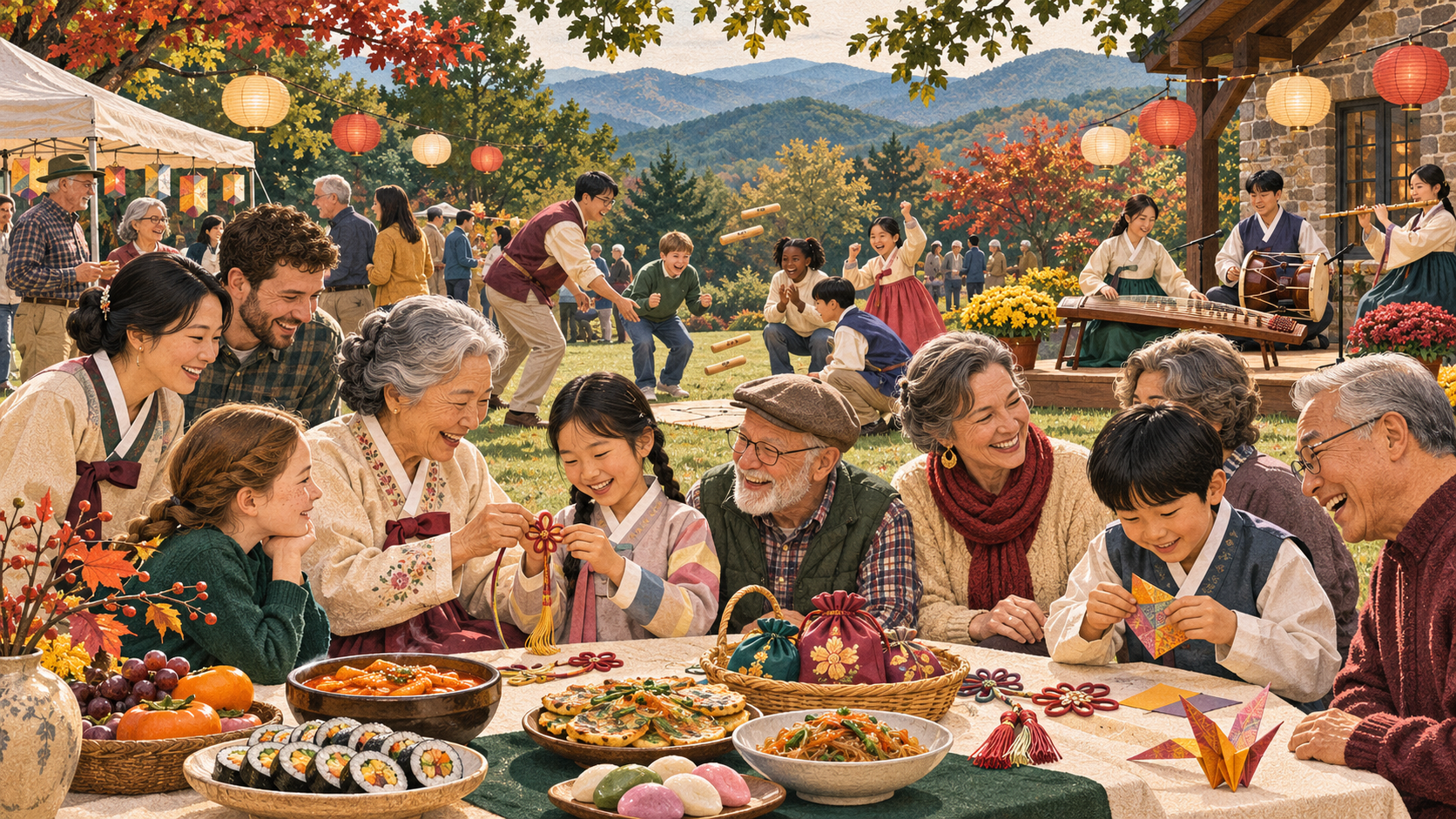
Chuseok offers a way to discuss harvest, family remembrance, travel, regional foods, and how modern families adapt traditions across distance. In East Tennessee, a potluck, story circle, songpyeon demonstration, or service project can connect gratitude to the local season.
Year-round cultural programming
- Children's Day activities and family games.
- Hangul introductions and practical Korean phrases.
- Cooking demonstrations with ingredient and allergy guidance.
- Traditional and contemporary music and dance.
- Oral-history interviews with longtime East Tennessee residents.
- Film, literature, art, and history discussions led by knowledgeable facilitators.
- Intergenerational workshops where elders teach and youth document.
How to avoid a shallow culture night
Food and K-pop can open the door, but a meaningful event adds history, context, and conversation. Invite participants to ask questions, compare family experiences, and name what they want to learn next. Do not treat Korean culture as fixed, uniform, or separate from Korean American life.
A simple event design
- 10 minutes: welcome and what the tradition means.
- 20 minutes: demonstration or story.
- 30 minutes: hands-on activity in small groups.
- 20 minutes: food or social time.
- 10 minutes: questions, resources, and next gathering.
Local and official resources
Use these links as starting points and confirm schedules, eligibility, prices, and services directly.
Common questions
Can non-Korean guests participate in Korean traditions?
Yes, when the host explains the meaning and invited form of participation. Respectful learning is different from copying symbols without context.
Which holiday should a new community program start with?
Seollal or Chuseok provides a strong anchor, but the best choice depends on volunteer capacity, venue, timing, and the age groups being served.
JOIN THE CONVERSATION
Which tradition, family story, food, or game should East Tennessee celebrate next?
Your experience may help another community member find useful people, places, and support.
Loading comments…